
Digital marketing has evolved rapidly over the last decade. What started as basic online advertising and email campaigns has now transformed into something far more intelligent, data-driven, and system-oriented. Today, businesses are no longer just running ads — they are building ecosystems. And at the center of this transformation is AI-powered digital marketing.
If you want scalable growth in a competitive digital landscape, artificial intelligence is no longer optional. It’s foundational.
In this article, we’ll explore how AI digital marketing is reshaping business growth, why marketing automation is critical for scalability, and how structured systems outperform traditional campaign-based approaches.
What Is AI-Powered Digital Marketing?
AI-powered digital marketing refers to the integration of artificial intelligence into marketing strategy, execution, analysis, and optimization. Instead of relying on guesswork or manual processes, AI systems analyze large volumes of data, detect patterns, predict behavior, and automate decisions.
This includes:
- Predictive audience targeting
- Smart bidding in paid advertising
- Automated lead nurturing
- Behavioral segmentation
- Conversion rate optimization using data modeling
- Real-time performance analysis
Unlike traditional marketing methods, AI digital marketing continuously learns and improves performance over time.
Why Traditional Marketing Doesn’t Scale Easily
Most businesses face the same issue: early growth is manageable, but scaling becomes chaotic.
Manual follow-ups, inconsistent reporting, disconnected campaigns, and siloed data make it difficult to maintain performance at scale. Growth plateaus because systems were never built — only campaigns were launched.
This is where marketing automation and AI-driven frameworks make the difference.
Scalable growth requires:
- Structured tracking architecture
- Automated lead workflows
- Integrated multi-channel campaigns
- Real-time analytics visibility
- Ongoing performance optimization
Without systems, growth becomes reactive instead of strategic.
The Core Pillars of AI Digital Marketing
Let’s break down the foundational components that drive scalable business growth.
1. Intelligent Data Analysis
AI thrives on data. Every click, impression, engagement, and conversion provides signals. Advanced algorithms analyze these signals to identify patterns humans often miss.
Instead of asking:
“Why did this campaign work?”
AI can model:
“What will likely work next?”
This predictive capability enables smarter budget allocation, better targeting, and reduced wasted spend.
2. Marketing Automation for Consistent Execution
Marketing automation transforms manual processes into structured workflows.
Examples include:
- Instant lead responses
- Automated email sequences
- Behavior-triggered offers
- CRM integrations
- Smart retargeting triggers
Automation ensures that no opportunity is lost due to human delay. It creates consistency — and consistency compounds results.
Businesses that invest in automation experience smoother scaling because systems handle repetitive tasks while teams focus on strategy.
3. Performance-Based Optimization
AI doesn’t just launch campaigns — it optimizes them.
Through continuous A/B testing, audience segmentation refinement, bid adjustments, and content variation analysis, AI ensures that campaigns evolve in real time.
This shift from “set and forget” to continuous optimization is what separates average performance from scalable growth.
4. Conversion-Focused Architecture
Traffic alone doesn’t scale revenue. Conversions do.
AI digital marketing integrates conversion rate optimization into the entire funnel:
- Landing page personalization
- Dynamic content delivery
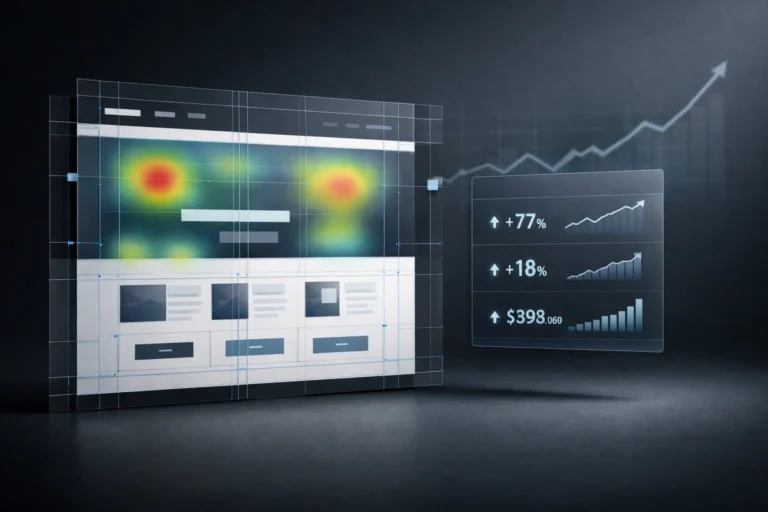
- Heatmap analysis
- Funnel drop-off detection
- Predictive form optimization
When every stage of the customer journey is engineered, growth becomes systematic rather than random.
The Real Power: Systems Over Campaigns
Many businesses make the mistake of chasing tactics.
One month it’s SEO.
Next month it’s paid ads.
Then it’s social media.
But scalable growth doesn’t come from isolated efforts. It comes from interconnected systems.
A well-built digital growth framework includes:
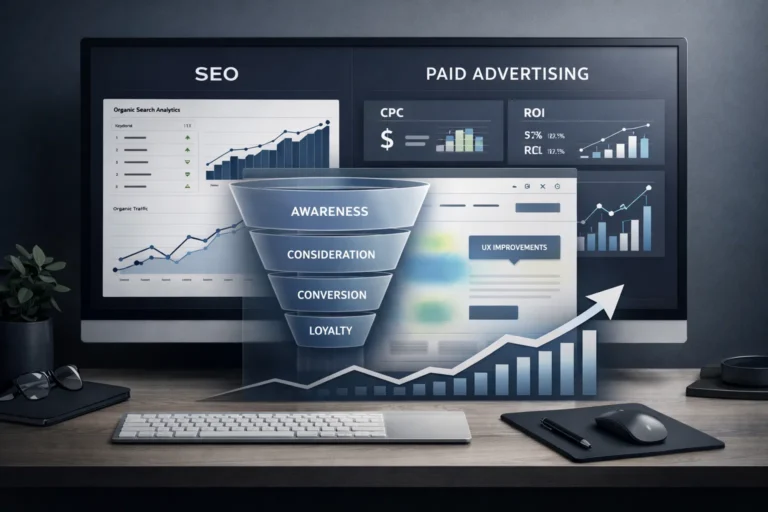
- Search visibility (organic + paid)
- Conversion-optimized landing architecture
- Automated nurturing sequences
- Retargeting intelligence
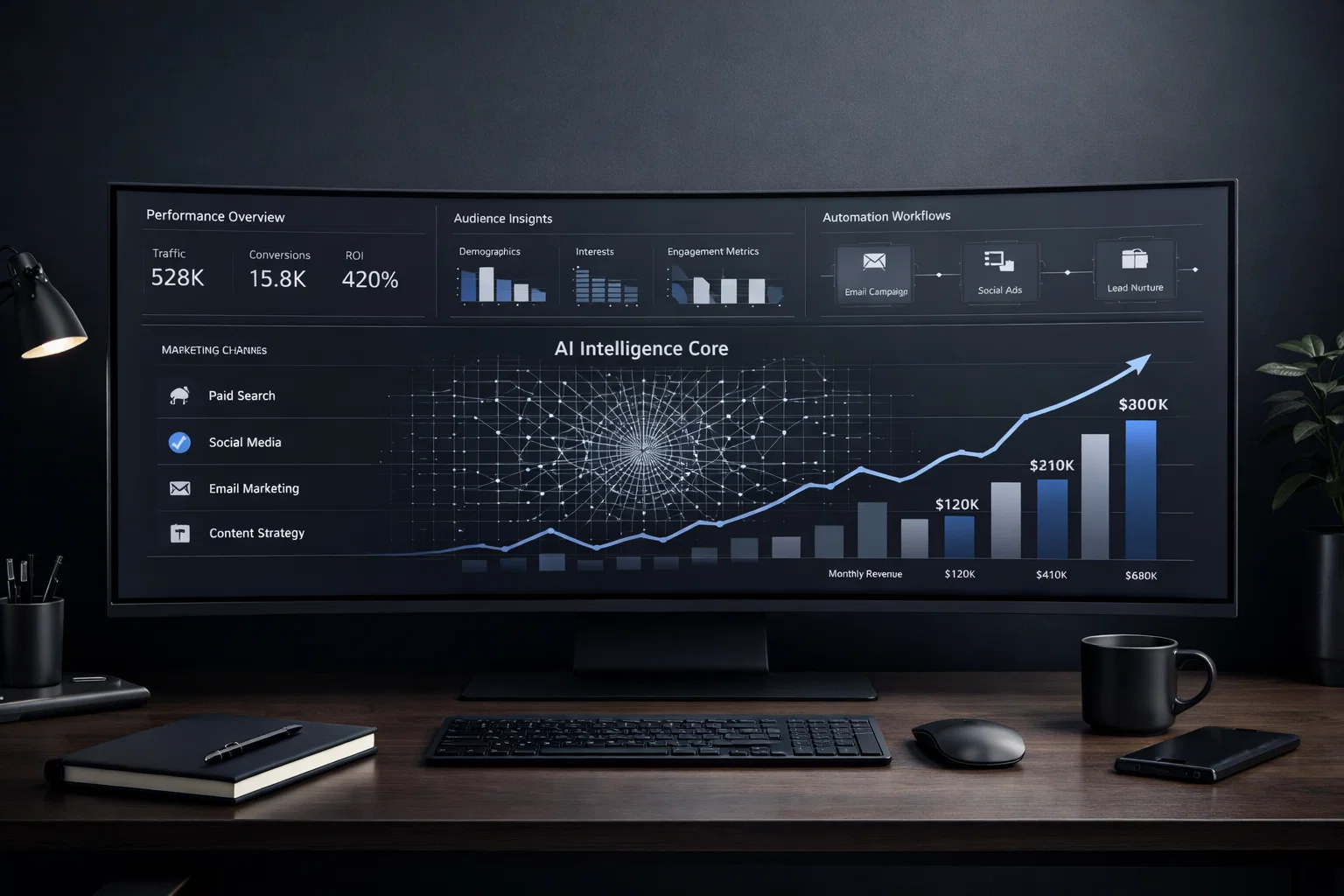
- Data dashboards for decision-making
When these elements work together, growth compounds instead of fluctuates.
If you’re exploring structured implementation, reviewing service capabilities like those outlined on a comprehensive digital services page can help clarify what full-stack execution looks like in practice.
AI Digital Marketing and Scalable Growth: A Practical Example
Imagine a business generating 200 leads per month.
Without AI and automation:
- Leads may go unanswered for hours.
- Follow-ups depend on manual reminders.
- Campaign optimization is slow.
- Budget adjustments are reactive.
Now integrate AI systems:
- Leads receive instant responses.
- Automated qualification routes prospects properly.
- Campaigns self-optimize based on performance signals.
- Budget allocation shifts automatically to high-performing segments.
The difference isn’t just efficiency — it’s exponential growth potential.
That’s the future of scalable marketing.
Why Scalable Growth Requires Predictive Strategy
Scalable growth is not about doing more. It’s about doing smarter.
AI enables predictive strategy through:
- Lookalike audience modeling
- Churn prediction
- Lifetime value forecasting
- Engagement scoring
- Intent-based segmentation
This predictive layer allows businesses to allocate resources where the probability of return is highest.
Instead of reacting to performance dips, you anticipate them.
Global Relevance of AI-Powered Marketing
One of the most powerful aspects of AI digital marketing is its global scalability.
AI systems are not limited by geography. They adapt to behavior patterns across markets and optimize based on real-time signals.
Whether a brand operates locally or globally, automation and predictive intelligence provide a structured growth advantage.
That’s why forward-thinking companies are transitioning from manual marketing efforts to engineered growth ecosystems.
Common Misconceptions About AI in Marketing
“AI replaces marketers.”
Not true. AI enhances marketers. Strategy still requires human insight — AI simply provides precision and scalability.
“Automation feels impersonal.”
When implemented correctly, automation improves personalization by delivering the right message at the right time.
“AI is only for large enterprises.”
Modern tools make AI-powered marketing accessible to growth-focused businesses of all sizes.
How to Get Started With AI Digital Marketing
Transitioning to AI-driven marketing doesn’t require a complete overhaul overnight. It begins with structured planning.
Step 1: Audit your current tracking and data visibility.
Step 2: Identify repetitive processes that can be automated.
Step 3: Integrate performance dashboards.
Step 4: Build interconnected acquisition and nurturing systems.
If you’re considering implementation, evaluating structured growth plans or requesting a tailored strategy consultation can provide clarity on what’s realistic for your business model.
The Future of Marketing Is Engineered
AI-powered digital marketing is not a trend — it’s the evolution of performance strategy.
Businesses that adopt automation, predictive intelligence, and structured growth frameworks will scale faster, operate more efficiently, and outperform competitors still relying on manual processes.
The future belongs to companies that engineer growth — not just chase traffic.
Scalable growth is no longer about working harder. It’s about building smarter systems.