

Not every visitor converts the first time.
In fact, most don’t.
People browse.
They compare.
They get distracted.
They leave.
If you’re only focusing on new traffic and ignoring past visitors, you’re leaving revenue on the table.
This is where a powerful retargeting strategy changes the game.
Retargeting (also known as remarketing ads) allows you to re-engage people who have already interacted with your brand — and guide them back into your conversion funnel.
In this article, we’ll break down how retargeting works, why it dramatically increases ROI, and how to build a high-performance remarketing system that consistently recovers lost leads.
What Is Retargeting?
Retargeting is a digital advertising strategy that targets users who have previously visited your website or interacted with your content but didn’t convert.
These users are:
- Warmer than cold traffic
- More aware of your brand
- Closer to making a decision
Instead of constantly chasing new prospects, retargeting focuses on those already interested.
That’s why it’s one of the highest ROI channels in digital marketing.
Why Most Visitors Don’t Convert Immediately
Before we talk strategy, we need to understand behavior.
People don’t convert instantly because:
- They’re researching
- They’re comparing options
- They need internal approval
- They’re not ready yet
- They got distracted
This delay does not mean disinterest.
It means your funnel needs a re-engagement layer.
Why Retargeting Strategy Increases ROI
Let’s look at logic.
Cold traffic requires:
- Awareness building
- Trust development
- Education
Retargeted traffic already has awareness.
That reduces:
- Acquisition cost
- Conversion friction
- Decision time
Higher conversion rates + lower acquisition cost = stronger ROI.
That’s the power of remarketing ads.
The 5 Core Retargeting Strategies That Actually Work
1️⃣ Segment Your Audience Properly
Not all visitors are equal.
A strong retargeting strategy segments users based on behavior:
- Visited homepage only
- Viewed pricing page
- Abandoned form
- Watched video
- Added product to cart
- Downloaded resource
Each segment requires different messaging.
Showing the same ad to everyone reduces performance.
2️⃣ Align Message With Funnel Stage
Your remarketing ads should reflect where the prospect is in their journey.
For example:
🔹 Early-stage visitors
→ Educational content or value-driven ads
🔹 Pricing page visitors
→ Offer reinforcement and trust-building
🔹 Cart abandoners
→ Urgency-driven messaging or incentives
Relevance improves conversions.
3️⃣ Use Sequential Retargeting
Instead of repeating the same ad, use structured sequencing.
Example:
Ad 1: Reminder
Ad 2: Social proof
Ad 3: Value explanation
Ad 4: Limited-time incentive
Sequential retargeting increases familiarity and reduces resistance.
It feels strategic — not repetitive.
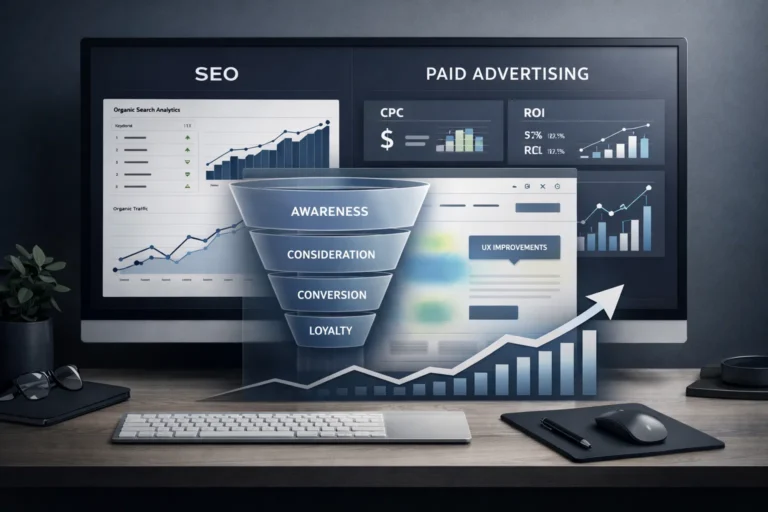
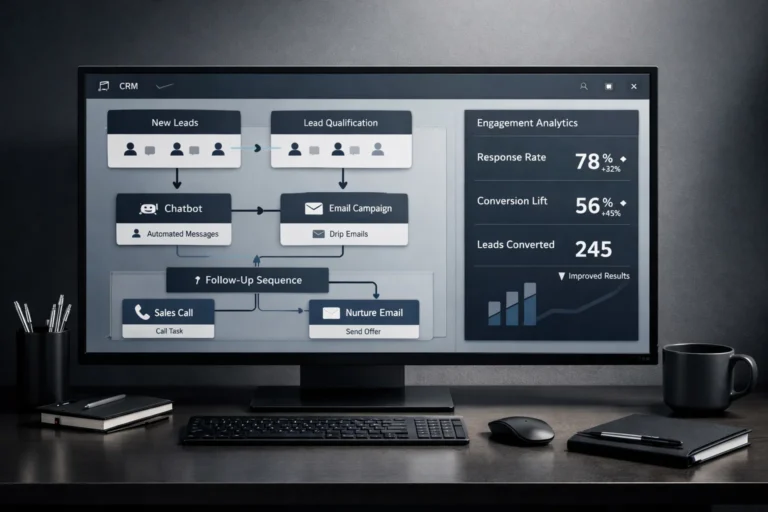
4️⃣ Integrate Retargeting With Your Funnel
Retargeting should not exist in isolation.
It should connect with:
- Email automation
- Landing page optimization
- Conversion rate optimization
- Analytics tracking
If someone clicks a remarketing ad and lands on an unoptimized page, performance drops.
High-performance systems connect retargeting to the entire funnel.
If you’re building structured funnel architecture, reviewing comprehensive digital marketing solutions can clarify how retargeting integrates into a broader performance strategy.
5️⃣ Optimize Frequency and Budget
Overexposure kills effectiveness.
A smart retargeting strategy controls:
- Ad frequency
- Budget allocation
- Creative rotation
- Duration windows
For example:
- 7-day window for high-intent visitors
- 30-day window for content viewers
- Exclude converted users immediately
Precision increases ROI.
The Psychology Behind Retargeting
Retargeting works because of familiarity.
The more people see your brand in a relevant context, the more trust builds.
It leverages:
- Repetition
- Recognition
- Reinforcement
But it must feel intentional — not intrusive.
Clean design, clear messaging, and value-focused communication outperform aggressive tactics.
Common Retargeting Mistakes
Here are frequent errors businesses make:
❌ Showing generic ads to all past visitors
❌ Not excluding converted users
❌ Sending traffic back to the homepage
❌ Ignoring creative testing
❌ No frequency control
❌ No clear performance tracking
Retargeting without structure becomes wasted spend.
Measuring Retargeting Performance
To truly increase ROI, you must track:
- Conversion rate of retargeted users
- Cost per acquisition
- Return on ad spend
- Assisted conversions
- Time to conversion
Retargeting often supports final conversion, even if it’s not the last click.
That’s why attribution modeling matters.
Advanced Retargeting Tactics
If you want to elevate your remarketing ads strategy:
Dynamic Retargeting
Show personalized products or services based on browsing behavior.
Lookalike Expansion
Use high-converting retargeting audiences to build new cold traffic segments.
Cross-Channel Retargeting
Retarget website visitors across multiple platforms for layered visibility.
AI-Optimized Bid Strategies
Allow machine learning systems to optimize delivery toward conversion probability.
When integrated properly, retargeting becomes a scalable growth engine.
Real-World ROI Impact
Let’s imagine:
You generate 5,000 visitors per month.
Conversion rate is 2%.
That’s 100 conversions.
If 30% of visitors leave but are retargeted successfully at a 5% conversion rate:
You recover 75 additional conversions.
That’s a 75% lift without increasing cold traffic.
This is why retargeting strategy is critical for sustainable growth.
Retargeting Is About Recovery, Not Just Ads
Many businesses view remarketing ads as a backup channel.
In reality, it’s a revenue recovery system.
Instead of constantly chasing new prospects, you maximize existing opportunity.
That’s smarter marketing.
Final Thoughts
Retargeting strategy is one of the most powerful tools in performance marketing.
It:
- Recovers lost leads
- Improves conversion rates
- Reduces acquisition cost
- Increases ROI
- Strengthens funnel performance
If your growth feels inconsistent, the issue may not be traffic volume — it may be lack of structured re-engagement.
Build segmentation.
Align messaging.
Integrate with automation.
Optimize continuously.
That’s how remarketing ads turn missed opportunities into measurable revenue.