
Lead generation used to be simple.
Run ads.
Collect emails.
Call prospects.
But today’s digital landscape is different. Attention spans are shorter, competition is higher, and customers expect instant responses. Businesses that rely on manual follow-ups and disconnected systems struggle to scale.
This is where AI automation is changing everything.
AI automation is not just about saving time. It’s about building intelligent systems that capture, qualify, nurture, and convert leads — consistently and at scale.
In this article, we’ll explore how AI automation is transforming lead generation strategy and redefining modern customer engagement.
What Is AI Automation in Marketing?
AI automation combines artificial intelligence with automated workflows to execute marketing actions intelligently and efficiently.
It includes:
- Automated email sequences
- AI chatbots
- Predictive lead scoring
- Smart segmentation
- Behavioral retargeting
- Dynamic content personalization
- CRM workflow automation
Unlike traditional automation, AI systems learn from behavior and continuously optimize performance.
This is the difference between automation and intelligent automation.
Why Traditional Lead Generation Is No Longer Enough
Manual lead generation strategies often fail because:
- Responses are delayed
- Leads are not qualified properly
- Follow-ups are inconsistent
- Data is not centralized
- No personalization exists
As competition increases, response time and relevance determine whether a prospect converts or disappears.
AI automation addresses these issues by creating instant, structured engagement.
The Evolution of Lead Generation Strategy
Lead generation is no longer about collecting contact details.
Modern lead generation strategy focuses on:
- Identifying high-intent prospects
- Engaging instantly
- Qualifying intelligently
- Nurturing automatically
- Converting predictably
AI automation enables all five stages without overwhelming your internal team.
How AI Automation Improves Lead Capture
Let’s break this down.
1️⃣ Instant Engagement with AI Chatbots
AI chatbots are one of the most powerful tools in modern lead generation.
Instead of waiting for a visitor to fill out a form, chatbots:
- Initiate conversations
- Answer questions instantly
- Qualify prospects
- Book appointments
- Collect structured information
This reduces friction.
When engagement happens in real time, conversion probability increases significantly.
2️⃣ Predictive Lead Scoring
Not every lead has equal value.
AI systems analyze behavior patterns such as:
- Pages visited
- Time spent
- Click activity
- Email engagement
- Interaction frequency
Based on this data, AI assigns lead scores.
This allows businesses to prioritize high-intent prospects and allocate resources strategically.
Instead of chasing every inquiry, you focus on the ones most likely to convert.
3️⃣ Automated Nurturing Sequences
Most leads don’t convert immediately. They need education and trust-building.
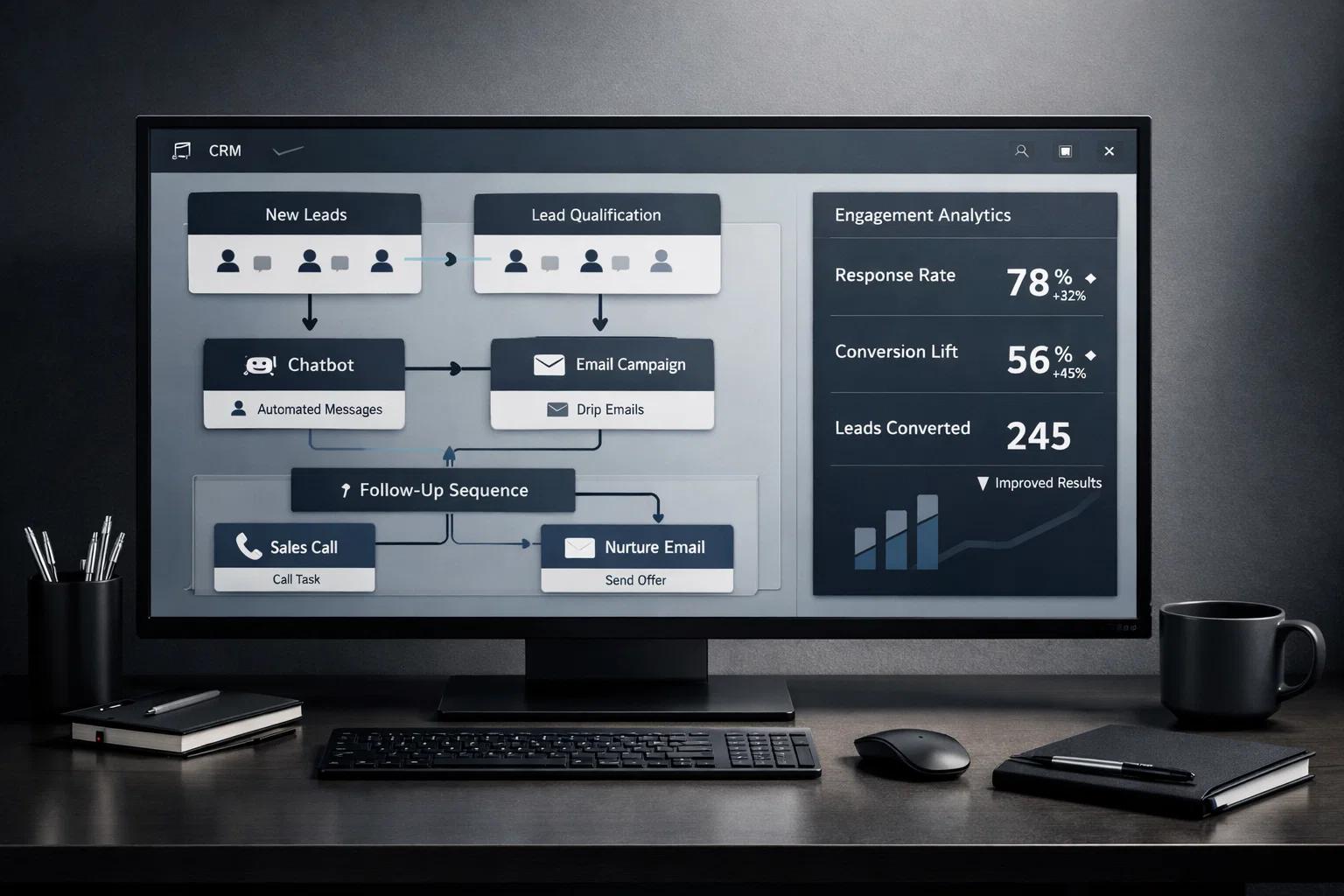
AI-powered automation creates structured nurturing workflows:
- Email sequences triggered by behavior
- Personalized offers
- Retargeting campaigns
- Follow-up reminders
- Content recommendations
Consistency is what drives customer engagement.
Automation ensures that communication never stops — even when your team is offline.
AI Automation and Customer Engagement
Customer engagement doesn’t end at the first sale.
In fact, long-term growth depends on retention and relationship building.
AI automation improves engagement by:
- Sending timely follow-ups
- Triggering loyalty offers
- Identifying churn risk
- Delivering personalized content
- Automating feedback collection
Engagement becomes proactive instead of reactive.
Real-Time Personalization at Scale
One of the biggest advantages of AI automation is personalization.
Instead of showing the same message to everyone, AI systems can:
- Adjust landing page content dynamically
- Recommend products based on behavior
- Modify email messaging based on interest
- Customize retargeting creatives
This increases relevance — and relevance increases conversions.
AI Automation in Paid Advertising
AI automation isn’t limited to email and chatbots.
In paid advertising, AI enables:
- Smart bidding strategies
- Budget optimization
- Audience expansion modeling
- Creative testing automation
- Conversion prediction
These capabilities make campaigns more efficient and scalable.
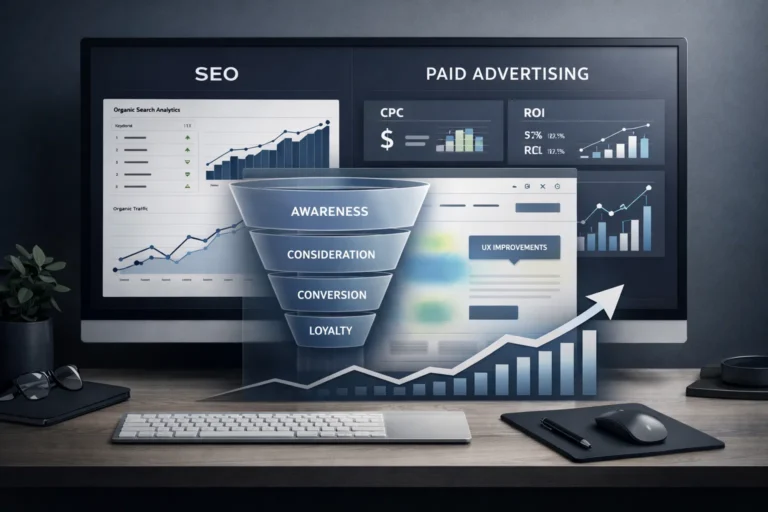
When integrated with structured funnel architecture, performance improves consistently.
Businesses that integrate AI-driven advertising frameworks often see stronger ROI because systems optimize continuously instead of relying on manual adjustments.
Data-Driven Decision Making
AI automation generates valuable insights.
Instead of relying on assumptions, businesses gain access to:
- Conversion behavior analytics
- Engagement tracking dashboards
- Funnel drop-off reports
- Campaign performance modeling
This data helps refine your lead generation strategy over time.
If you’re exploring structured marketing systems, reviewing comprehensive digital marketing solutions can clarify how automation integrates with full-funnel growth architecture.
The Compounding Effect of Automation
Here’s what many businesses underestimate:
Automation compounds.
Every optimized workflow improves performance.
Every improved performance increases revenue.
Increased revenue allows reinvestment.
Reinvestment fuels scaling.
This is how AI automation supports scalable growth.
Without automation, growth stalls when manual capacity reaches its limit.
With automation, systems continue operating 24/7.
Common Myths About AI Automation
“Automation feels robotic.”
When implemented correctly, automation enhances personalization — it doesn’t remove it.
“AI replaces human teams.”
AI supports strategy and execution. Human oversight remains critical.
“Automation is complicated.”
Modern tools are accessible and scalable. The key is structured implementation.
Practical Steps to Implement AI Automation
If you want to integrate AI automation into your lead generation strategy, start with:
1️⃣ Mapping your customer journey
2️⃣ Identifying repetitive tasks
3️⃣ Integrating CRM tracking
4️⃣ Implementing chatbot or instant response systems
5️⃣ Building automated nurturing sequences
6️⃣ Monitoring and optimizing continuously
Start simple. Scale gradually.
If you’re unsure where to begin, structured growth plans or requesting a tailored consultation can help identify automation opportunities aligned with your business goals.
The Future of Customer Engagement
AI automation is redefining engagement standards.
Customers now expect:
- Immediate responses
- Personalized experiences
- Seamless transitions
- Clear communication
- Consistent follow-up
Businesses that rely on outdated manual processes struggle to meet these expectations.
AI-driven systems ensure no opportunity is missed, no lead goes cold, and no interaction is wasted.
Final Thoughts
AI automation is not just a tool — it’s a competitive advantage.
It transforms:
- Lead capture into intelligent qualification
- Manual follow-up into automated nurturing
- Data into predictive strategy
- Engagement into measurable growth
If your current lead generation feels inconsistent, the solution may not be more traffic — it may be smarter systems.
Build structured automation.
Leverage AI insights.
Create scalable engagement frameworks.
That’s the future of high-performance marketing.